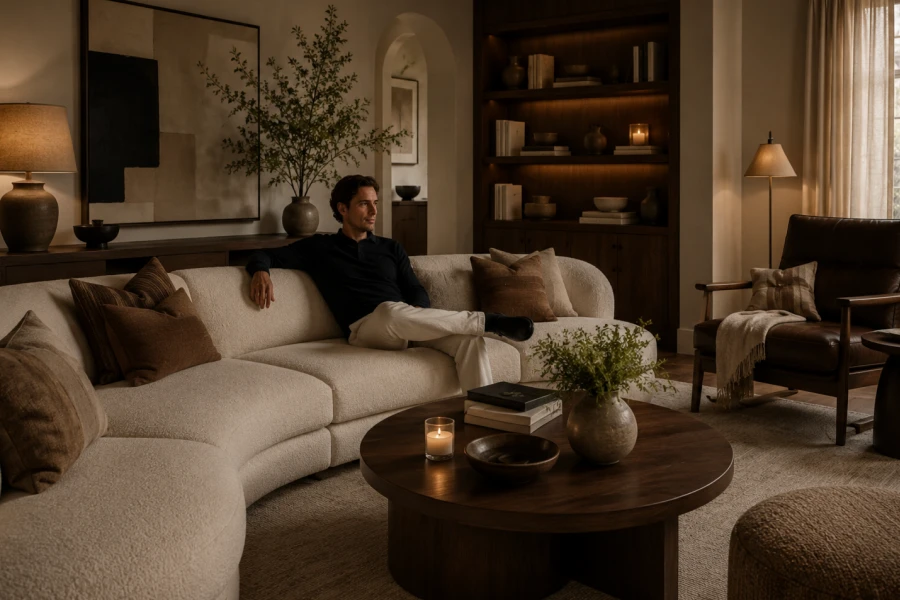
Cozy living room design changes how a home feels after a long day. It makes the main room warmer, softer, and easier to use. Many living rooms look finished but do not feel comfortable. The layout may fight conversation. The lighting may feel flat. The furniture may look nice but invite no one to linger. A stronger room starts with real habits. Think about how you relax, gather, read, watch, and host. Then design around those moments. Comfort becomes visible when the room supports real life.
Cozy living room design depends on how people move and sit. A room can have beautiful furniture and still feel awkward. Seating should invite connection without blocking flow. Pull chairs closer when conversation matters. Angle a sofa toward the room, not only the television. Leave clear paths around tables and corners. Use rugs to define the main zone. This makes the room feel anchored. It also helps guests understand where to settle. A thoughtful living room layout ideas approach creates comfort before decoration begins.
Texture tells the body that a room is welcoming. Soft throws, layered pillows, woven rugs, and linen curtains create warmth. These pieces work even in simple rooms. They soften edges and reduce visual coldness. Mix textures instead of adding too many colors. A chunky knit can sit beside smooth cotton. A velvet pillow can balance a rustic basket. The contrast creates richness. It also keeps the room from feeling flat. Choose materials you want to touch. Good soft texture decor makes comfort immediate.
Cozy living room design needs more than one light source. A single ceiling light often makes the room feel exposed. Layered lighting creates zones and mood. Use table lamps near seating. Add floor lamps where reading happens. Consider candles or warm accent lights in the evening. Keep bulbs warm rather than cool. Dimmer switches make the room more adaptable. Light should guide attention gently. It should never flatten the whole space. Strong mood lighting for living rooms changes everything.
Furniture should match how the room is actually used. A formal chair may look elegant but stay empty. A deep sofa may invite the whole family. A storage ottoman can hide blankets and support feet. Side tables make drinks and books easy to place. Scale matters because oversized pieces crowd the room. Undersized pieces can feel temporary. Test comfort before style whenever possible. The best choices feel good every day. They also age gracefully. A cozy seating arrangement should welcome different kinds of rest.
Cozy living room design should not erase personality. A room can be calm and still feel distinctive. Display a few meaningful objects. Use art that reflects your taste. Keep books, ceramics, or travel pieces in edited groups. Personal items give the room emotional texture. Too many items can feel cluttered. Too few can feel impersonal. Balance is the secret. Let the room tell a quiet story. A strong home comfort styling plan makes that story feel polished.
A cozy room feels finished when details work together. The rug fits the seating zone. The lighting matches the evening mood. The textiles feel layered but not messy. The coffee table holds only useful or beautiful pieces. Plants, bowls, trays, and books create softness. Nothing should feel random. Every item should support comfort or meaning. This does not require expensive design. It requires intention. With warm neutral interiors, even small updates feel elevated.




Leave a comment