
Comfort living room inspiration begins with the feeling you want to create. A room should not only look attractive in photos. It should support slow mornings, relaxed evenings, and easy gatherings. Many homes miss comfort because they focus only on matching pieces. Real comfort comes from proportion, softness, lighting, and flow. It also comes from details that feel personal. The room should help people settle naturally. It should invite conversation without forcing formality. When design follows daily life, beauty lasts longer. That is the heart of a welcoming living room.
Comfort living room inspiration becomes clearer when you study your routines. Notice where people naturally sit. Notice which surfaces collect cups, remotes, books, and chargers. These patterns reveal what the room needs. Add side tables where items already land. Place blankets near the seats people use most. Create zones for reading, watching, and talking. This makes the room feel intuitive. It also reduces clutter because storage follows behavior. Comfort improves when design stops fighting life. A family lounge setup can make the whole home feel easier.
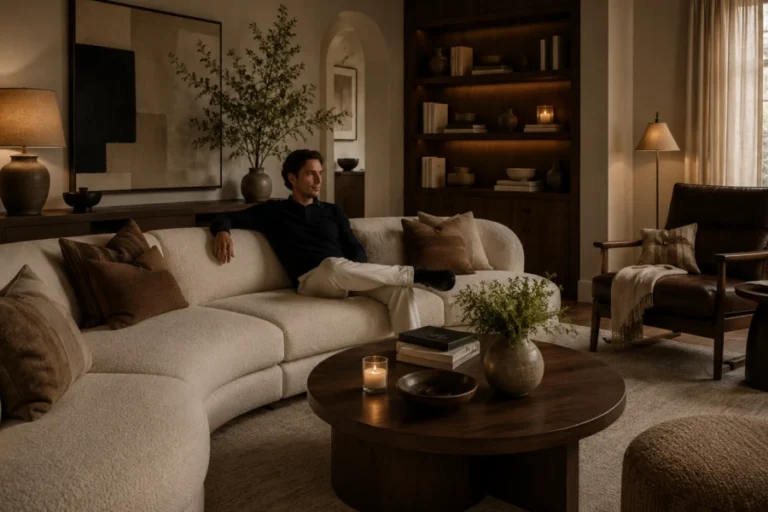
Softness should feel inviting, not chaotic. Pillows work best when they vary slightly in size and texture. Throws should look relaxed but not abandoned. Rugs should feel generous under the furniture. Curtains can soften windows and absorb sound. Upholstery should suit real use. Choose fabrics that match pets, children, guests, and maintenance needs. Comfort improves when softness stays practical. A room that is too precious becomes stressful. A room that is too bare feels unfinished. Use soft texture decor with purpose.
Comfort living room inspiration often depends on color temperature. Warm colors tend to feel more embracing. Cream, clay, olive, caramel, and muted rust create depth. Cooler tones can work when balanced with texture. The important choice is harmony. A room feels calmer when colors relate to each other. Repeat tones in small ways around the space. A pillow can echo a piece of art. A wood table can warm a neutral sofa. These repetitions make the room feel composed. Warm neutral interiors are especially useful for this effect.
Comfort often comes from details people notice subconsciously. A lamp beside a chair says someone can read there. A tray on the ottoman makes snacks easy. A basket of blankets makes guests feel welcome. A plant softens hard lines. A low stack of books adds personality. Scent can make the room memorable. Sound matters too, especially in open homes. Soft rugs and curtains reduce echo. Every small detail supports the same message. The room says, stay a while. That is the power of home comfort styling.
Comfort living room inspiration should include guests, not only daily family life. Hosting feels easier when people know where to sit. Create more landing surfaces than you think you need. Keep extra pillows nearby but not in the way. Make conversation areas feel balanced. Avoid pushing every chair against the walls. Use lighting that flatters faces in the evening. Keep throws clean and accessible. Remove fragile clutter before gatherings. The room should feel generous. A cozy seating arrangement makes hosting feel natural.
A comfortable living room can shift with the year. Light linen works beautifully in warmer months. Wool, velvet, and heavier knits feel better in winter. Seasonal changes do not need to be dramatic. Swap pillow covers, throws, branches, and scent. Adjust lighting as daylight changes. Move blankets closer when nights get colder. Keep the main furniture stable. Let smaller layers carry the seasonal mood. This keeps the room interesting without constant redesign. Smart interior styling makes the process simple.

Leave a comment